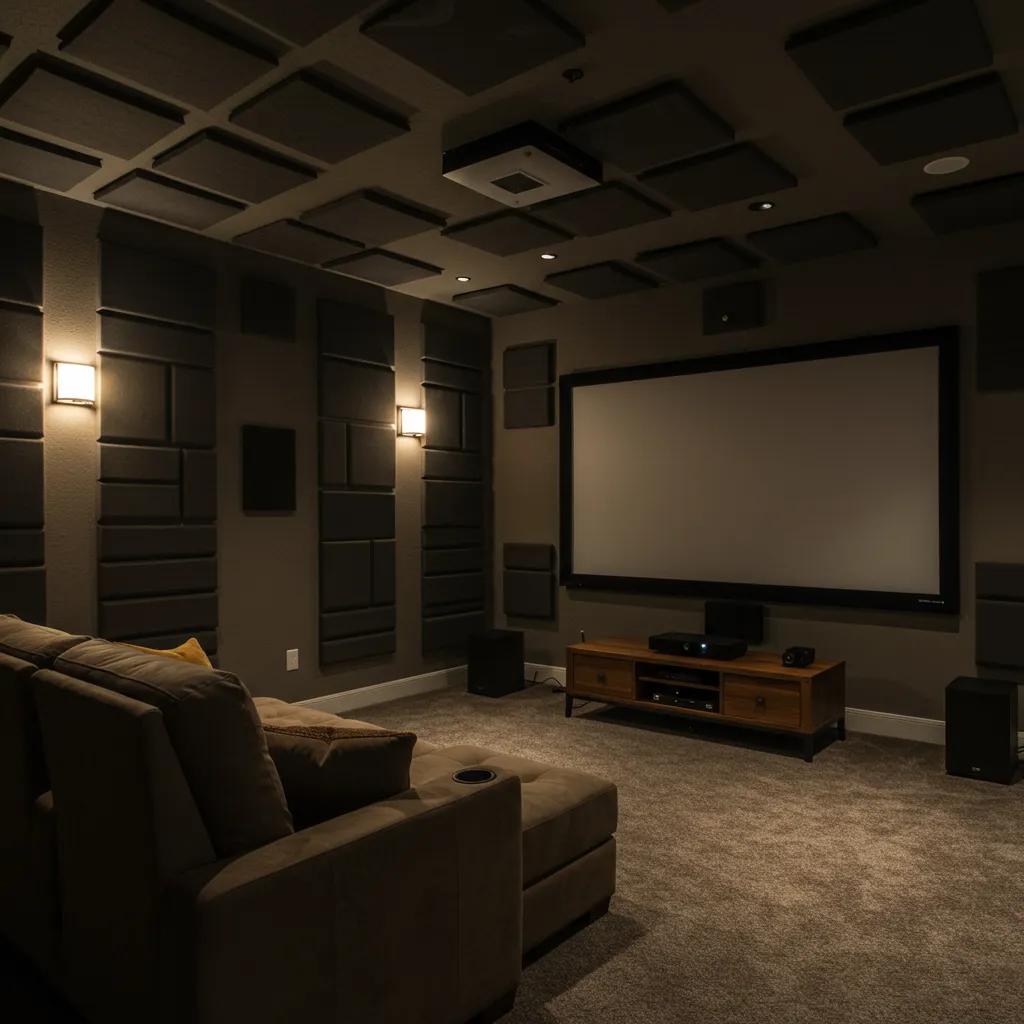
Beyond Streaming: Why Acoustic Panels Matter for Home Theater
In the quest for the ultimate home theater experience, many enthusiasts focus heavily on the visual elements: a high-definition projector or a large OLED screen, crisp 4K content, and comfortable seating. Similarly, the audio system often receives significant attention, with surround sound speaker setups, powerful receivers, and subwoofers taking center stage. Yet, there’s a crucial, often overlooked component that can make or break the entire immersive experience: the acoustics of the room itself. This is where home theater acoustic panels come into play, transforming a good setup into an extraordinary one. Think of it this way: you wouldn't drive a high-performance sports car on a bumpy dirt road and expect peak performance. The car needs a smooth track. In the same vein, your state-of-the-art audio system needs an acoustically optimized room to deliver its full potential. Without proper acoustic treatment, even the most expensive speakers can sound muddy, dialogues can be hard to discern, and bass notes can overwhelm or disappear entirely. The truth is, while settings on your streaming device or even your AV receiver offer some control, they can't fundamentally fix problems caused by the physical environment. As much as we might tweak HBO Max settings or pore over device guides for optimal sound, these are merely software adjustments; they don't address the core issue of how sound behaves within your specific room.The Unseen Villain: Understanding Acoustic Problems in Home Theaters
Before diving into solutions, it's vital to understand the "villains" that plague untreated home theater spaces. These are common acoustic issues that subtly, or not so subtly, degrade your audio experience:- Reverberation and Echo: Sound waves bounce off hard surfaces (walls, ceilings, floors, windows) creating a lingering effect known as reverberation. In smaller, livelier rooms, this can manifest as distinct echoes. This makes dialogue hard to understand and blurs the details of a soundtrack.
- Standing Waves: These occur when sound waves reflect back and forth between parallel surfaces, creating areas of exaggerated bass (nodes) and areas where bass virtually disappears (anti-nodes). This leads to an uneven, often boomy and undefined bass response that lacks impact and precision.
- Flutter Echo: A rapid succession of echoes between two parallel reflective surfaces, often perceived as a "ringing" sound. This can be particularly annoying during quiet passages of a film.
- Comb Filtering: Occurs when direct sound combines with a slightly delayed reflection, causing certain frequencies to be cancelled out and others to be boosted. This can create a "hollow" or "phasiness" to the sound.
Beyond the Buzz: How Home Theater Acoustic Panels Transform Sound
This is where home theater acoustic panels become the heroes of your listening space. These specially designed panels work by either absorbing or diffusing sound waves, preventing them from causing the problems listed above.Sound Absorption: Taming Reflections and Reverberation
Absorptive panels are designed to soak up sound energy rather than reflecting it. They are typically made from porous materials like fiberglass, mineral wool, or specialized acoustic foam, encased in fabric. When sound waves hit these panels, their energy is converted into heat, effectively reducing the amount of sound bouncing around the room. The primary benefits include:
- Improved Dialogue Clarity: By reducing reflections, voices become crisp, clear, and easy to understand, even in complex action scenes.
- Tighter Bass Response: Specialized thick absorbers, known as bass traps, are strategically placed in corners where low-frequency sounds tend to accumulate. These are crucial for taming boomy bass and ensuring a punchy, accurate low-end.
- Reduced Reverberation Time: The room sounds "drier" and more controlled, allowing you to hear the subtle details in soundtracks and sound effects that would otherwise be masked by reflections.
- Enhanced Stereo Imaging and Soundstage: With fewer distracting reflections, the soundstage becomes wider, deeper, and more precise, placing sounds exactly where they should be in the auditory space.
Sound Diffusion: Preserving Energy with Even Distribution
Unlike absorbers that remove sound energy, diffusers aim to scatter sound waves in multiple directions. They typically feature complex, irregular surfaces that break up direct reflections, preventing flutter echoes and creating a more spacious, natural sound without making the room sound "dead." Diffusers are often used on rear walls or side walls where absorption might be too aggressive, preserving the room's liveliness while improving clarity.
The combination of absorbers and diffusers creates a balanced acoustic environment, allowing your home theater system to perform at its peak and deliver a truly captivating audio experience that transports you directly into the film or game.
Designing Your Soundscape: Practical Steps for Installing Acoustic Panels
- Assess Your Room:
- The "Clap Test": Stand in the middle of your room and clap loudly. Listen for echoes or excessive ringing. A room with good acoustics will have a quick, natural decay to the sound.
- Room Dimensions: Note down your room's length, width, and height. Online room mode calculators can help identify potential standing wave issues based on these dimensions.
- Surface Materials: Identify reflective surfaces (bare walls, glass, hard floors) and absorptive surfaces (carpets, soft furnishings).
- Identify First Reflection Points: These are critical areas where sound from your speakers first bounces off a wall and reaches your listening position.
- Sit in your primary listening chair. Have a friend hold a small mirror against the side walls, moving it until you can see the front left speaker's reflection. That's a first reflection point for that speaker. Repeat for all main speakers and side walls/ceiling. These are prime locations for absorptive panels.
- Strategic Placement:
- Front Wall (Behind Speakers): Absorption here can help reduce reflections from the front wall, tightening up the soundstage.
- Side Walls (First Reflection Points): Crucial for absorbing reflections that can blur stereo imaging.
- Ceiling (First Reflection Points): Overhead reflections can significantly impact dialogue clarity.
- Rear Wall: A mix of absorption and diffusion is often ideal here. Absorption helps tame reflections, while diffusion can add spaciousness.
- Corners (Bass Traps): Absolutely essential for controlling low-frequency buildup. Bass traps are thicker and specifically designed for corners.
- Start Gradually: You don't need to turn your room into an anechoic chamber. Start with a few key panels at the most critical first reflection points and bass traps, then add more as needed. You'll likely hear a significant improvement with even a modest number of panels.
- Aesthetics: Modern acoustic panels come in a vast array of colors, fabrics, and even custom prints. They can be integrated seamlessly into your decor, becoming a design feature rather than an eyesore. Many companies offer decorative panels that look like art pieces.
Maximizing Your Investment: Tips for Choosing the Right Acoustic Panels
When selecting home theater acoustic panels, consider these factors to ensure you're making the best choices for your specific needs:- Material Matters:
- Mineral Wool/Fiberglass: These are highly effective absorption materials, offering excellent performance across a broad frequency range. They are a common choice for professional-grade panels.
- Acoustic Foam: While more affordable, foam panels are generally less effective, especially at lower frequencies. They are better suited for very small rooms or for addressing high-frequency flutter echoes.
- Wood (for Diffusers): High-quality diffusers are often made from precisely cut wood, designed to scatter sound efficiently.
- Noise Reduction Coefficient (NRC) Rating: This single-number rating indicates how much sound energy a material absorbs across a range of frequencies (from 0, no absorption, to 1, complete absorption). Look for panels with higher NRC ratings (e.g., 0.85 or above) for effective absorption.
- Panel Thickness: Thicker panels absorb lower frequencies more effectively. For general absorption, 2-inch thick panels are a good starting point, while bass traps often need to be 4-6 inches thick or more.
- Fire Safety Ratings: Always check that panels meet local fire safety standards, especially if they are made from foam or fabric-covered materials.
- Budget vs. Performance: While custom-designed solutions can be pricey, there are many excellent off-the-shelf options available that offer significant improvements without breaking the bank. Prioritize bass traps and first reflection point absorption for the most impactful changes.
- Don't Forget the Ceiling: The ceiling is often a large, untreated reflective surface. Ceiling panels or clouds can dramatically improve sound clarity.