Optimizing Sound: Acoustic Panels Absent from Device Guides
In the relentless pursuit of the ultimate home entertainment experience, consumers meticulously select their screens, invest in powerful sound systems, and subscribe to a myriad of streaming services offering unparalleled content. Device guides and user manuals for these services – like those detailing HBO Max compatibility, settings, or extra member features – meticulously walk users through setup, troubleshooting, and personalization. Yet, amidst all this crucial information, a fundamental component often goes entirely unmentioned: the very room where all this technological magic is meant to unfold. Specifically, the critical role of home theater acoustic panels, and indeed, entire room acoustics, remains conspicuously absent from these guides. This oversight is more than just a minor omission; it's a silent saboteur of the immersive experience you strive to create.
The Digital Focus: Why Device Guides Miss the Mark
Modern device guides, whether for a smart TV, a soundbar, or a streaming app, are designed with a singular purpose: to ensure the hardware and software function correctly. They are exhaustive in detailing technical specifications, connection protocols (HDMI ARC, optical, Bluetooth), Wi-Fi requirements, and navigating user interfaces. You'll find extensive information on how to install an app like HBO Max on various devices, adjust picture presets, enable specific audio formats like Dolby Atmos or DTS:X, and manage user profiles. The emphasis is squarely on the digital signal chain and the electronic components that process it.
This digital-first approach, while necessary, overlooks a crucial analog reality: sound is a physical phenomenon that interacts directly with its environment. A pristine digital audio stream, perfectly decoded by your receiver, can be utterly corrupted by the acoustic characteristics of your listening space. The problem isn't the signal; it's the room itself. Streaming services and device manufacturers, understandably, prioritize delivering their content efficiently and ensuring device compatibility. However, by ignoring the physical space where this content is consumed, they inadvertently set users up for a suboptimal experience, regardless of their expensive equipment.
Unmasking the Sonic Saboteurs: How Room Acoustics Impact Your Experience
Imagine purchasing a high-performance sports car but only driving it on a muddy, unpaved road. That's akin to having a top-tier home theater system in an acoustically untreated room. The hard surfaces typical of most living spaces – bare walls, ceilings, floors, windows – act as reflective surfaces, bouncing sound waves around uncontrollably. This creates a host of sonic problems that degrade clarity, impact, and overall immersion:
- Excessive Reverberation and Echo: Sound waves persist for too long, creating a wash of sound that blurs dialogue and muddies music. It makes the room sound "live" or "boomy."
- Standing Waves: Low-frequency sounds (bass) can become unnaturally boomy or completely disappear in certain areas of the room due to phase cancellations and reinforcements. This leads to inconsistent bass response depending on your seating position.
- Flutter Echo: Rapid, discrete reflections between parallel hard surfaces, creating an annoying "ringing" or "slapping" sound.
- Comb Filtering: Reflections arriving slightly delayed at your ears interfere with the direct sound, causing certain frequencies to be attenuated or boosted, leading to an unnatural, "hollow" or "tinny" sound.
- Poor Soundstage and Imaging: The precise placement of sounds within the sonic landscape is lost, making it difficult to pinpoint individual instruments or voices.
These issues don't just reduce enjoyment; they can lead to listener fatigue, forcing you to constantly adjust volume or strain to understand dialogue. The intricate sound design meticulously crafted by filmmakers and musicians is completely undermined, robbing you of the intended experience. This is where the magic of home theater acoustic panels truly shines, transforming a problematic space into an optimized listening environment.
Beyond Simple Settings: The Limitations of Software Solutions
Many device guides and streaming platforms offer various audio settings, from equalizer (EQ) adjustments to virtual surround sound modes. While these can offer minor tweaks, they are fundamentally limited in addressing core acoustic problems. An EQ can boost or cut certain frequencies, but it cannot absorb an unwanted reflection or prevent a standing wave. Virtual surround processing attempts to simulate a multi-speaker setup from fewer channels, but it's an artificial effect that can't replicate the physical separation and immersion of a properly configured system in an acoustically treated room.
Room correction software, such as Audyssey or Dirac Live, found in many AV receivers, offers a more sophisticated approach. These systems use a microphone to measure your room's acoustic response and apply digital filters to compensate for some of its shortcomings. While highly beneficial, even the best room correction software is primarily an electronic equalizer and time-domain corrector. It can flatten frequency response and adjust delays, but it cannot physically remove sound energy from the room. It's an excellent *enhancement* to acoustic treatment, but not a *replacement*. For a deeper dive into these distinctions, consider how Elevate Your Experience: Acoustic Panels vs. HBO Max Settings compares the effectiveness of physical and digital solutions.
The Unsung Heroes: Integrating Home Theater Acoustic Panels
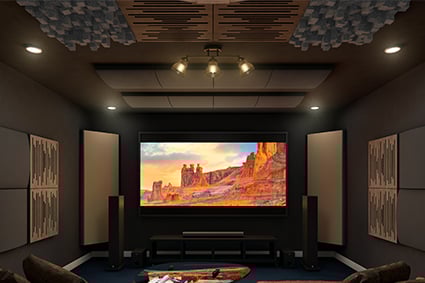
The solution to these pervasive acoustic challenges lies in strategically implementing home theater acoustic panels. These aren't just decorative elements; they are engineered tools designed to manipulate sound waves within your room, fundamentally altering its sonic character. They typically fall into two main categories:
- Absorbers: Made from porous materials like mineral wool, fiberglass, or specialized foam, these panels convert sound energy into heat. They are crucial for reducing excessive reverberation, taming echoes, and tightening bass response. Placing them at first reflection points (where sound from your speakers first hits a wall and bounces back to your listening position) is key for improving clarity and imaging.
- Diffusers: These panels scatter sound waves in multiple directions, rather than absorbing them. This helps to maintain a sense of "liveness" and spaciousness while preventing harsh reflections. Diffusers are often used on rear walls or ceilings to create a more enveloping and natural soundstage, preventing the room from sounding "dead."
The benefits of integrating acoustic panels are transformative:
- Crystal-Clear Dialogue: Speech becomes articulate and easy to understand, even during complex action sequences.
- Tighter, More Defined Bass: Muddy, boomy bass transforms into punchy, accurate low frequencies.
- Expanded Soundstage: Sounds appear to emanate from a wider, deeper space, extending beyond the physical boundaries of your speakers.
- Improved Imaging: Individual sounds and instruments are precisely located within the soundstage, creating a more realistic and engaging experience.
- Reduced Listener Fatigue: A more controlled and natural sound environment allows for longer, more enjoyable listening sessions.
Effective placement of home theater acoustic panels typically involves addressing first reflection points on side walls and ceilings, treating the wall behind the speakers, and potentially the wall behind the main listening position. Bass traps are often employed in corners to manage low-frequency build-up. While professional acoustic design can yield optimal results, even a thoughtful DIY approach with a few well-placed panels can make a dramatic difference. This investment in your room unlocks the full potential of your expensive audio equipment, proving that Beyond Streaming: Why Acoustic Panels Matter for Home Theater is a concept worth embracing.
A Call to Action: Bridging the Gap in Home Theater Guidance
The glaring absence of information regarding home theater acoustic panels in device guides and streaming service documentation highlights a significant gap in consumer education. While these guides excel at the digital and electronic aspects, they often leave users unaware of the physical environment's profound impact on sound quality. It's time for manufacturers and content providers to recognize that true optimization extends beyond the screen and speakers to encompass the entire listening space.
For consumers, this means taking proactive steps. Don't wait for your device manual to tell you about acoustics; empower yourself with knowledge. Research the principles of sound absorption and diffusion, understand how sound behaves in your room, and explore the various types of home theater acoustic panels available. The journey to a truly optimized home theater is a holistic one, where cutting-edge technology meets thoughtful environmental design. By embracing acoustic treatment, you don't just fix problems; you unleash the full, glorious potential of your audio system, transforming your space into an unparalleled sonic sanctuary.
In conclusion, while device guides diligently address every setting and connection for your streaming services and hardware, they fall short by ignoring the fundamental role of room acoustics. The transformative power of home theater acoustic panels cannot be overstated. By understanding and addressing the sonic characteristics of your listening environment, you move beyond merely consuming content to truly experiencing it, achieving a level of immersion and clarity that no digital setting alone can provide. Your ideal home theater isn't just about what you watch or listen to; it's about *how* you hear it in your dedicated space.